
Now Reading: How Digital Twins Help Companies Try Out New Ideas
-
01
How Digital Twins Help Companies Try Out New Ideas

How Digital Twins Help Companies Try Out New Ideas

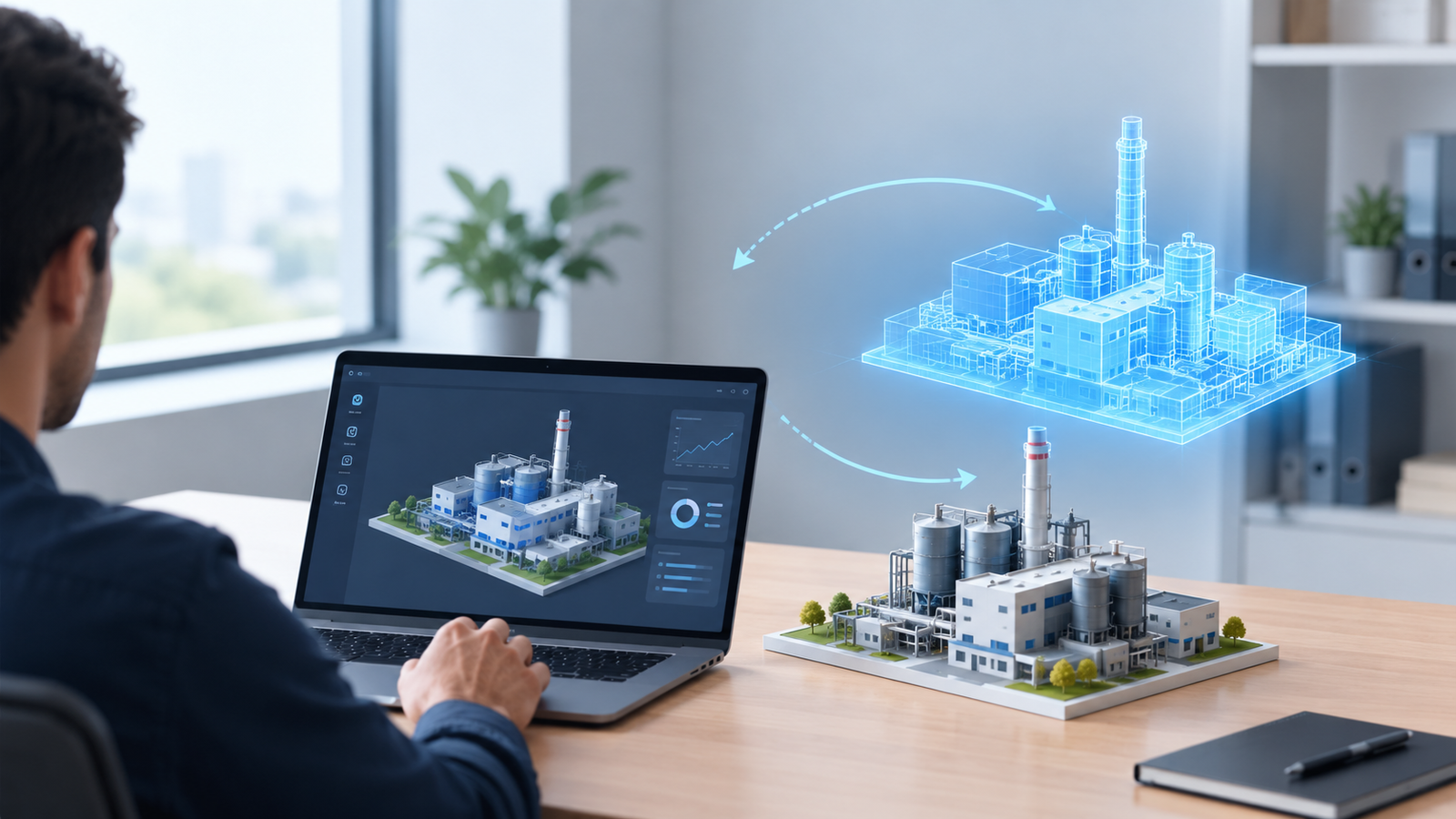
Sometimes it’s hard for a business to make a change without knowing exactly what to expect. A company could want to redesign its factory, change how a service was delivered, introduce a new product, or experiment with anything else that could prove to be a good choice or an expensive mistake.
Digital twins are helping businesses reach a new frontier in trying out their ideas.
A digital twin is a digital version of something, something that can be used to understand how things are working in real life, and how they might change if certain variables are changed
Understanding how that change could prove to be vital for multiple industries.
We’ll begin by further explaining what a digital twin is,
why it’s growing popular among businesses
and then finally,
how it’s helping them experiment with new ideas.
Understanding the Concept of a Digital Twin
A digital twin is not a traditional digital model of something.
Digital models of machines and products tend to exist in the realm of theory. A digital twin is something to base that theory upon. Because information from the physical world can be used to update the digital twin, it becomes a more accurate and useful tool for understanding the life of the real-world process it represents.
For example, say that company owns a massive factory. That company does not need to change how the factory works in person first if they want to see how a new approach might work. The company can instead create a similar set of conditions in a digital place, and try out different variables for the factory. Perhaps, they could use it to test how much more productivity would be gained by increasing the speed of the machinery.
The key is that digital twins do not tell a business or scientist about what they can expect; they provide a means to think through a decision.
Companies Can Experiment with Digital Twins to Discover Potential Flaws
One important aspect of digital twins is that they reduce the risk that experimenting comes with.
Physical experiments could take resources and the time of workers. A failed decision might shut something down for a while too. Instead, a digital experiment could allow the company to see what would happen if a certain choice was made. They could then look over several outcomes to find the one that would produce the least risk and wasted materials. That kind of scenario allows for an easier beginning toward a real-world test and reduces fear of failure.
Another use for a digital twin is being able to find potential issues with how a system works before making changes
Factories regularly rely on data from machinery to understand how they operate.
Systems within the machinery collect data to show pressure, temperature resistance, energy used, rpm, and more.
Having some data like this connected and seen through a digital format could allow organizations to see what they might not usually notice in person. They could see if a process was not balanced out for another, or if machinery needed more frequent maintenance. That sort of maintenance information might even be enough to help organizations keep a closer eye on what the operations within it might look like.
The Power of Digital Twins Helps Organizations Plan Cities
While these tools may seem like a helpful thing for industries that manufacture items, it can prove to be a vital tool outside of manufacturing. For instance, urban planning could see the power of a digital twin to help planners understand what a potential plan might do to the flow of traffic or if buildings fit within a space.
They won’t be able to make conclusions through a digital twin, but they also don’t need to. Planners typically make assumptions based around the things that would affect their plan. With the additional information from a digital twin, they might be able to reduce the risk of something going sideways.
That kind of approach won’t eliminate the need for careful analysis of potential planning aspects like the politics behind any given move. It can help planners get more insight into what some decisions might mean for a city’s structure.
Digital Twins Can Help Product Designers Reach New Heights
Designers and businesses that produce products may be another group that could benefit from using a digital twin. After all, when making a product, testing it is a time-consuming and expensive process.
A digital twin could allow product designers and engineers to see what a product could be like, and how it might operate, prior to making the first working version. Designers can test what a product could do, and identify what weaknesses might appear before building multiple prototypes. This would be especially useful on processes and products that work together to create items, or ones with mechanically complex elements, like modern computers and vehicles.
Such an understanding could reduce the number of tests required and allow these industries to save their time and effort spent analyzing and working around potential failures when testing out the prototype.
Why Companies Should Focus on Quality Data When Using this Technology
The usefulness of a digital twin is determined by the information supporting it. With the wrong information being put into a digital twin, teams might think they understand a system when this isn’t the case. This kind of misunderstanding could be avoided if quality information is prioritized over other aspects. In a lot of ways, quality data is more important than the tools businesses use.
For this reason, a company is unlikely to be able to rely on technology when information quality is ignored. Businesses instead must make investments into gathering the data and placing proper sensors as needed to track the most relevant information at the places where they matter.
Digital Twins Could Change How a Company Makes a Decision
Businesses rely on data to drive decisions forward.
Some companies may rely on the technology even further by using itto ask a wide variety of questions. For example, with the factory example brought up earlier, businesses may ask what they expect to learn about an increased production rate, which equipment should be taken care of, the risk of an idea, or how a process might be altered to reduce waste. The amount of information available from a digital twin might help them make those decisions at a higher quality than before, especially since testing options out physically would require resources, time, and workers’ efforts in most cases.
Businesses Still Need to Understand the Risks Associated with a Decision Despite New Tools
Despite the benefits a digital twin can bring to experimentation and decision-making, it also carries a few important problems. First of all,
it’s a rather costly technology to use. The process to build a useful twin is a large-time investment.
It also depends on data, meaning that companies will need to spend time deciding what information is worth collecting and protecting from outside threats. Businesses might also face the risk of creating something unnecessarily complex for their situation. Finally, businesses need to make the choice to build the technology to suit a particular purpose for them. They aren’t required to make a digital twin of anything, and they should avoid doing so simply to use the technology.
A company may instead start with something small rather than a complete digital experiment of something like an entire factory.
How Might These Concepts Shape the Future?
With the rise of internet-connected devices, cloud storage, artificial intelligence, and other technologies, it’s reasonable to believe the potential of digital twins will grow with these fields. Digital twins may eventually provide highly-detailed, faster experimentation, and more completely automated experimentation capabilities. However it seems that the concept will always revolve around an understanding of real-world situations from their digital counterpart before making large-scale changes. As this concept grows, its potential uses across different industries will grow too.
These concepts could create new opportunities for a company to experiment without the same risk.
They can prove to be essential tools in experimentation, but they won’t be a stand-in for experience and judgment. Companies making use of the technology will make the right decisions sooner, and it will give society time to see if digital environments were the right approach for them. As the need for safer, easier, faster experimentation grows, digital twins could take on a larger importance to businesses.
Conclusion
Digital twins is a new opportunity for organizations to study complex systems and test out ideas. Instead of forcing changes into nature, companies can use the digital world to experiment and find solutions.
The technology itself will not replace experience and common sense, but it will serve as a valuable tool to help decision-makers gain more information before acting on something.
As organizations look to find ways to innovate their offerings and products while maintaining a strong safety profile, digital twins may play a critical role in the future of systems and product development.
Related Posts
Stay Informed With the Latest & Most Important News
Previous Post
Next Post


Advertisement