

Now Reading: United Airlines Flight UA2092 Diverted After a Suspected Bomb Threat
-
01
United Airlines Flight UA2092 Diverted After a Suspected Bomb Threat


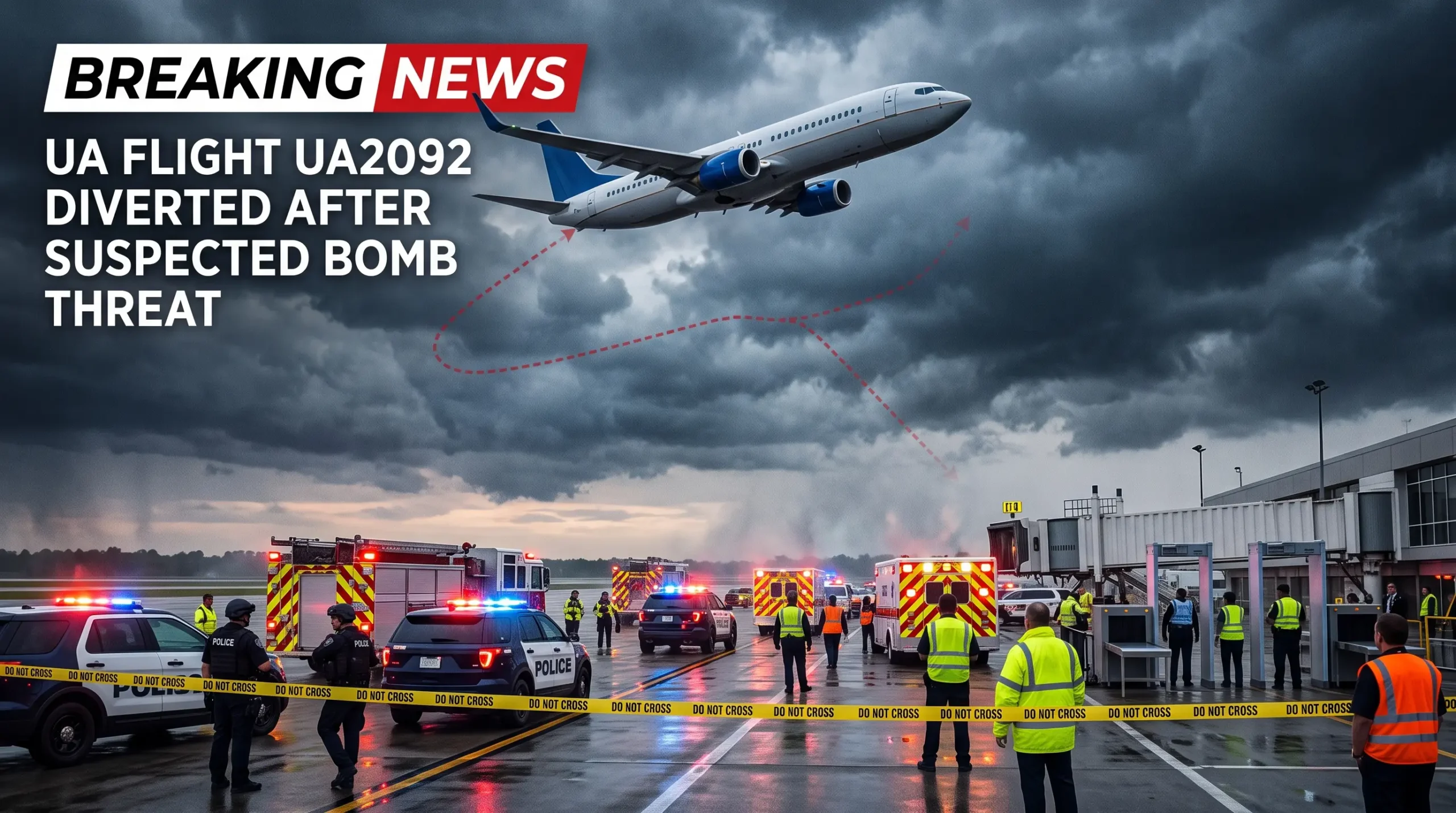
This article delves into the recent incident involving United Airlines Flight UA2092, which was dramatically diverted due to a suspected bomb threat. We will explore the critical moments of the event, from the initial reports of a security concern mid air to the safe landing and subsequent investigation at Pittsburgh International Airport.
Overview of the Incident: United Airlines Flight UA2092 Diverted After a Suspected Bomb Threat
On a recent Saturday, a domestic flight operating as UA2092, which departed from Chicago O’Hare (ORD) en route to New York LaGuardia (LGA), was abruptly diverted to Pittsburgh International Airport (PIT) following a grave mid air security concern. The diversion became necessary mid journey due to a reported “bomb scare,” prompting immediate action from the flight crew. Upon its arrival at Pittsburgh, all 159 passengers and six crew members were safely evacuated, ensuring no immediate harm. United Airlines confirmed the incident, stating that United Flight 2092 landed in Pittsburgh to address the potential security concern, highlighting the swift response to the unfolding threat.
Details of United Airlines Flight UA2092
The flight, operating as UA2092, was a scheduled service from Chicago O’Hare (ORD) to New York LaGuardia (LGA). The aircraft involved was a Boeing 737 MAX 8, registered as N37325, which had been delivered to United Airlines in November 2023. Onboard were 159 passengers and six crew members. The aircraft, leased from SMBC Aviation Capital, is configured to accommodate 166 passengers. This was the second leg of the day for the aircraft, having previously flown from Harrisburg International Airport (MDT) to Chicago.
| Flight Number | UA2092 |
| Route | Chicago O’Hare (ORD) to New York LaGuardia (LGA) |
| Aircraft Type | Boeing 737 MAX 8 |
| Aircraft Registration | N37325 |
| Delivery Date | November 2023 |
| Occupancy | 159 passengers, 6 crew members |
Timeline of Events
United Flight UA2092 was initially scheduled to depart from Chicago at 8:00 AM, but delays pushed its departure to 9:54 AM. After takeoff, the plane flew west before turning northeast, ascending to its cruising altitude of 35,000 feet. The situation escalated as the aircraft passed over Cleveland. Just five minutes later, the plane made an abrupt turn towards Pittsburgh for an emergency landing, with a communication timestamp of “CREW 15:42Z / 10:42 CDT” indicating the critical moment. The Boeing 737 MAX 8 safely landed at Pittsburgh International Airport around 11:45 AM, approximately one hour and seven minutes after its initial departure from Chicago, effectively bringing an end to the immediate airborne threat.
Initial Response to the Bomb Threat
Upon detection of the potential threat, initial audio recordings reveal the pilot communicating with air traffic control, reporting a “sequential beeping of a suspected item onboard” and stating, “We are going to have to start treating this as a potential bomb.” The pilot promptly declared the need for a diversion to “get things settled.” The activation of a 7700 squawk code signaled an in flight emergency, triggering standard emergency protocols. Upon landing at Pittsburgh, the aircraft was met by the Allegheny County Police Department (ACPD) and its specialized bomb squad, initiating the on ground response to the security concern.
| Diversion Consideration | Location |
| Cleveland Hopkins International Airport | CLE |
| Pittsburgh International Airport | PIT |
Understanding Bomb Threats in Aviation
Definition and Types of Bomb Threats
A bomb threat in aviation refers to any communication, whether credible or not, that suggests the presence of an explosive device on an aircraft, at an airport, or targeting a flight. These threats can range from anonymous phone calls or written notes to more sophisticated hoaxes designed to cause widespread disruption. While many threats turn out to be false alarms, every potential bomb scenario must be treated with the utmost seriousness by the airline and aviation authorities, leading to immediate responses such as the diversion of a flight like United Airlines Flight UA2092.
Impact on Flights and Passengers
The impact of a bomb threat on flights and passengers is profound and immediate. When a flight is diverted due to a bomb threat, it causes significant delays, stress, and anxiety for all onboard. Passengers on United Flight UA2092 experienced the disruption of their journey from Chicago to New York, landing instead at Pittsburgh International Airport. Such incidents not only disrupt travel plans but can also lead to long term psychological effects for those involved, underscoring why rapid and decisive action is critical to resolve the security concern safely.
Legal Consequences for Making Threats
Making a bomb threat, even if it’s a hoax, carries severe legal consequences under both federal and international laws. Individuals found guilty of making false threats against an aircraft or airport can face substantial fines, lengthy prison sentences, and a permanent criminal record. The authorities, including the FBI and Allegheny County law enforcement involved in the United Airlines Flight UA2092 incident, rigorously investigate all such threats to deter others from engaging in similar dangerous and disruptive behavior that jeopardizes aviation security.
Passenger and Crew Experiences
Passenger Reactions During the Flight
During the diversion of United Airlines Flight UA2092, passengers likely experienced a mix of confusion, fear, and apprehension as the plane was diverted to Pittsburgh. The unexpected change in flight path and the subsequent announcement of a security concern would have heightened anxiety among the 159 passengers. Remaining calm while facing a potential bomb threat is incredibly challenging, yet the safe landing and evacuation at Pittsburgh International Airport on Saturday demonstrate the effectiveness of the crew’s management of the situation.
Flight Crew Protocols in Emergencies
The flight crew on United Flight 2092 followed stringent emergency protocols designed for security threats, prioritizing the safety of everyone onboard. This involved clear communication with air traffic control, implementing diversion procedures, and preparing passengers for an emergency landing at Pittsburgh. Their training is crucial for managing such high stress situations, ensuring that every step, from the initial declaration of the potential bomb to the safe evacuation from the aircraft, is executed with precision and efficiency.
Safety Measures Taken Post Threat
Following the landing of United Airlines Flight UA2092, extensive safety measures were immediately activated at Pittsburgh International Airport. The plane was isolated, and the Allegheny County bomb squad, along with other law enforcement agencies like the FBI, commenced a thorough investigation. All passengers were safely evacuated, some potentially using emergency slides, ensuring everyone was moved away from the aircraft while the bomb squad investigated the suspected item and cleared the plane of any actual threat.
Investigation and Security Measures
Investigation by Authorities
Following the safe landing of United Airlines Flight UA2092 at Pittsburgh International Airport, the Allegheny County Police Department (ACPD) and its specialized bomb squad immediately met the aircraft to commence a thorough investigation. An Explosive Ordnance Disposal (EOD) team, accompanied by a group of highly trained K9s, meticulously conducted a sweep of the plane, all passengers, and their luggage. These exhaustive searches produced a negative result for any explosive material, reassuring authorities that the suspected bomb threat was unfounded. FBI special agents and bomb techs were also on the scene, actively investigating the security concern. FBI Pittsburgh later issued a statement confirming their awareness of a reported threat onboard a flight headed to New York, and that their Special Agent Bomb Techs and Special Agents were on the ground coordinating with local authorities. Ultimately, the county bomb squad confirmed that the incident had since been cleared.
Security Concerns for Future Flights
The incident involving United Airlines Flight UA2092, although resolved with no actual bomb found, inevitably raises significant security concerns for future flights and the aviation industry as a whole. Such a bomb threat, even if a hoax, underscores the constant vigilance required from airlines, airport security, and law enforcement. The seamless coordination observed during the diversion of the flight from Chicago to New York highlights the robust protocols in place, but it also prompts a review of how such threats originate and how they can be preempted. Passengers may naturally feel increased apprehension, making it imperative for airlines to communicate enhanced security measures to restore confidence in air travel.
Role of Airport Security in Threat Management
The swift and effective management of the threat during the United Airlines Flight UA2092 diversion to Pittsburgh International Airport underscored the critical role of airport security. Pittsburgh International Airport officials unequivocally stated that “safety and security are always a top priority,” a commitment demonstrated by their rapid response. Upon the aircraft’s arrival, crews and law enforcement, including the Allegheny County bomb squad and the FBI, efficiently cleared the scene. The thorough screening of the aircraft, which ultimately yielded negative results for explosive materials, showcased the diligent processes in place to protect passengers and crew. This incident served as a live demonstration of how airport security protocols are designed to mitigate potential bomb threats and ensure the safe resolution of emergencies.
Conclusion and Lessons Learned
Summary of the UA2092 Incident
The United Airlines Flight UA2092 incident involved a flight from Chicago O’Hare to New York LaGuardia that was diverted to Pittsburgh due to a suspected bomb threat. The emergency was triggered by a “beeping” item and a “possible bomb” message, prompting the crew to declare an emergency and squawk 7700.
| Number of Passengers | 159 |
| Number of Crew Members | 6 |
| Landing Outcome | Safe landing in Pittsburgh |
| Evacuation Status | All individuals evacuated without injury, some utilizing slides |
The Allegheny County Police Bomb Squad, including EOD and K9 teams, along with FBI Special Agents and Bomb Techs, promptly responded and conducted a thorough sweep of the plane, passengers, and luggage, all yielding negative results for explosive material. Displaced passengers were re-accommodated onto a replacement flight to New York, and the incident caused no major disruptions to other flights at Pittsburgh International Airport. The plane involved, N37325, remained on the apron at Pittsburgh and was expected to return to regular operation, demonstrating an effective resolution to the security concern.
Implications for Airlines and Passengers
The diversion of United Airlines Flight UA2092 due to a bomb threat carries significant implications for both airlines and passengers. For airlines, it reinforces the necessity of continuous vigilance, robust security protocols, and efficient emergency response plans to safely manage potential threats and minimize disruptions. It highlights the importance of crew training in identifying and responding to security concerns. For passengers, while initially alarming, the swift and safe resolution of the United flight to Pittsburgh demonstrates the efficacy of these measures, potentially bolstering confidence in aviation security. However, such events can also heighten anxiety, prompting airlines to prioritize clear communication and support for affected passengers.
Future of Aviation Security
The UA2092 incident provides a snapshot into the future of aviation security, underscoring the ongoing need for advanced technologies and seamless inter agency collaboration. The swift response by the bomb squad, FBI, and local authorities at Pittsburgh International Airport after the flight from Chicago landed highlights the critical human element in threat mitigation. Moving forward, efforts will likely focus on enhancing threat detection capabilities, improving intelligence sharing to preempt potential bomb threats, and refining evacuation and investigation protocols to further ensure the safety of every passenger and crew member. The continuous adaptation of security measures is paramount to stay ahead of evolving threats in global aviation.
Related Posts



Stay Informed With the Latest & Most Important News
Previous Post
Next Post




Advertisement